Why Your Score Falls Apart at STAR CC (Chungju)
Complete Pro-Level Course Management Guide for All 18 Holes
Introduction
At first glance, STAR Country Club in Chungju appears to be a relaxed and forgiving golf course. However, once you actually play it, you quickly realize that it is not simply an “easy course,” but a highly strategic layout designed with precision.
Many golfers experience a common pattern here:
👉 They don’t make major mistakes off the tee, yet their score gradually collapses as the round progresses.
The reason is simple—
the real difficulty of this course does not lie in the tee shot, but in everything that comes after.
Hazards and elevation changes are heavily concentrated around second-shot areas. These cannot be managed by distance calculation alone. Without proper understanding of lies, slopes, and course flow, small mistakes accumulate and lead to significant score loss.
This guide is not just a course overview. It is based on real course management principles used by professional golfers, explaining:
- Why scores fall apart at STAR CC
- How to prevent it with practical strategy
The goal is not to give simple tips, but to provide a clear decision-making framework that golfers of all levels can apply.
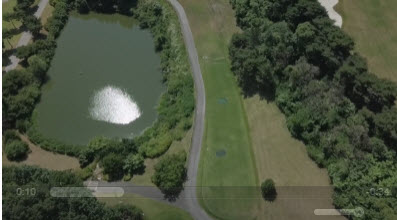
Core Strategy Summary
The essence of STAR CC is this:
👉 The game is decided on the second shot, not the tee shot.
- Fairways are relatively wide and visually comfortable
- Tee shots feel easy and low-pressure
- But difficulty begins after the ball lands
Even from the same fairway:
- Shot difficulty varies dramatically depending on ball position
- Hazard angles and pin positions frequently limit your options
Course characteristics:
- Lake Course → Direction + risk control
- Hill Course → Lie control + slope management
Many golfers focus on hitting the ball farther rather than placing it well—
and this leads to trouble on the next shot.
👉 This course rewards management, not aggression
👉 Minimizing risk is the most realistic way to protect your score
Overall Strategic Framework (Pro Perspective)
From a professional standpoint, STAR CC is less about technique and more about decision-making.
- Aggressive play may bring short-term gains
- But it significantly increases long-term risk
Key principle:
👉 You must clearly divide holes into “attack holes” and “defense holes.”
Examples:
- On a Par 5 with hazards and wind → laying up for a safe third shot may be optimal
- On an easy-looking Par 4 → conservative play may be required
Course flow:
- Front 9 (Lake Course) → psychological pressure + risk control
- Back 9 (Hill Course) → technical precision + lie management
Understanding this flow is critical.
Tee Shot Strategy
At STAR CC, a tee shot is not just about hitting the fairway.
👉 The key is positioning for the next shot
Even on the same fairway:
- Left vs right changes hazard angles
- Approach lines to the green differ significantly
Key points:
- On dogleg holes → prioritize visibility over distance
- Avoid choosing directions that only look safe
Common mistake:
👉 Choosing a “safe-looking” line that actually creates a harder second shot
👉 The tee shot is not the start of the hole—
it is the foundation of your entire strategy

Why the Second Shot Determines Your Score
The most critical scoring zone at STAR CC is the second shot.
Reasons:
- Most hazards and bunkers are placed in this zone
- Distance alone cannot solve the problem
Key mistakes:
- Attacking the pin too directly
- Ignoring slope, wind, and lie conditions
Pro approach:
👉 “Don’t aim at the pin—aim at space.”
Key strategy:
- Choose safe landing areas
- Reduce risk first, score second
Green Strategy & Putting
The greens at STAR CC:
- Soft surfaces
- Subtle undulations
- Difficult distance control
On faster greens:
👉 Distance control is far more important than aggression
Core principles:
- Play for two-putt strategy
- Adjust approach lines based on pin position
- On downhill putts → prioritize control over boldness
Common mistake:
👉 Chasing birdies leads to 3-putts
👉 On this course:
“Don’t focus on making putts—focus on not leaving difficult ones.”
Lake Course Strategy
The Lake Course is defined by water hazards and visual pressure.
Key characteristics:
- Strong psychological intimidation
- Pressure often exceeds actual difficulty
Strategy:
- Prioritize direction over distance
- Avoid aggressive shots
- Choose safe routes consistently
👉 The key is risk minimization
Hill Course Strategy
The Hill Course has less psychological pressure but higher technical difficulty.
Key characteristics:
- Frequent slope and lie changes
- Requires precise distance control
Key focus:
- Balance on uneven lies
- Proper club selection
- Shot control
👉 The most important factor:
Maintaining a stable rhythm throughout the round
Strategy by Skill Level
Beginners
- Eliminate aggressive play completely
- Aim for center fairway
- Use a 3-shot (3-on) strategy
- Focus on “not collapsing,” not scoring low
Intermediate Players
- Improve second-shot accuracy
- Adjust strategy based on pin position
- Develop directional control
Advanced Players
- Clearly define attack vs defense holes
- Be aggressive only on scoring opportunities
- Control risk intentionally
👉 One strategy does not fit all—
your approach must match your skill level
Practical Round Summary
To protect your score at STAR CC, remember these 3 rules:
- Tee shots should aim for positions that make the next shot easier, not just the center
- On second shots, prioritize safe areas over pins
- In putting, focus on distance control rather than aggression
👉 Following just these three principles will stabilize your scoring significantly.
Final Verdict
STAR Country Club is not just a comfortable golf course.
It is a course that demands:
- Strategic thinking
- Self-control
- Smart decision-making
For aggressive players, it may feel restrictive.
But for golfers who understand course management, it delivers exceptional satisfaction.
👉 The key to this course is not “playing well,” but
“making fewer mistakes.”
Once you understand this, your score will naturally stabilize.
In the end, STAR CC is not a course that tests your power—
it is a course that evaluates your understanding of the game.