Complete Hole-by-Hole Guide to Teddy Valley Golf & Resort, Jeju
A Classic Strategic Course Where the Second Shot and Positioning Matter More Than the Tee Shot
When people first encounter Teddy Valley Golf & Resort in Jeju, many come away with the impression that it feels more comfortable than expected. The fairways do not squeeze in dramatically, and the view from the teeing ground is relatively open. So at the moment you step onto the first hole, it does not necessarily feel like an intensely intimidating championship course. And that very first impression is what causes many golfers to let their guard down.
Once the round actually begins, however, Teddy Valley reveals a completely different face. This golf course is willing to accept the tee shot to a certain extent, but from the second shot onward, it becomes a course that asks very specific questions about the value of where the ball lies, the angle into the green, whether you can avoid the bunkers, and even the type of first putt you will be left with. In other words, it is more important where your drive comes to rest than whether you hit a good driver, and it is more important what kind of putt you leave yourself than whether you simply hit the green.
This is exactly why so many golfers lose strokes at Teddy Valley. They see the fairways looking wide enough and swing the driver confidently, but once the ball lands, the view for the next shot changes, the angle becomes awkward for a direct pin attack, and the pressure from bunkers and green slopes begins to build at the same time. That is why it is more accurate to describe this course as one that values a well-placed shot more than a merely well-struck one.
Its deep and strategically positioned bunkers, three-dimensional greens, and clearly defined landing-area design all send a very clear message to the player. If you force an aggressive shot at the pin, the course punishes you. If you attack the green from the wrong position, it tempts you into making another mistake on the putting surface. For that reason, Teddy Valley is regarded not as a casual sightseeing-style course where you simply enjoy the scenery, but as a classic strategic course that tests your ability to read the layout and make sound decisions from beginning to end.
In this article, I will divide the hole-by-hole flow of Teddy Valley Golf & Resort into the Out Course and the In Course, and explain from an expert point of view what needs to be protected in the early, middle, and late stretches of each. Rather than simply introducing the course, I will focus on how you should think your way around it if you want to protect your score in a real round.
To state the conclusion first: Teddy Valley is a golf course where the result is determined not by the tee shot, but by the second shot, positioning, and the discipline to maintain your management principles all the way to the end. It is a course where one good decision matters more than one good shot. That is the essence of Teddy Valley.
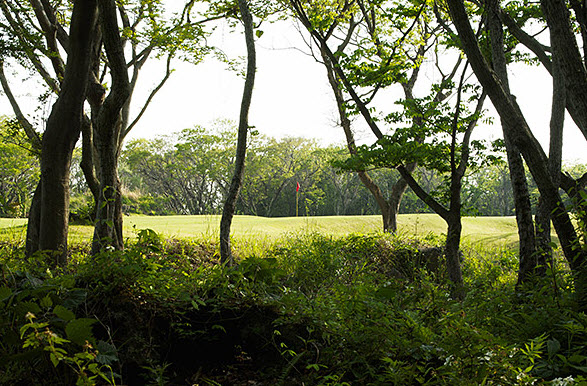
Why You Need to Understand Teddy Valley Golf & Resort Hole by Hole
Teddy Valley Golf & Resort is not simply a course with a high level of difficulty. In fact, the opening few holes often give the feeling that you can start more comfortably than expected. The pressure from the tee shot is not excessive, and the sightlines are relatively stable. The problem starts immediately after that. Because the course seems to accept the tee shot to a certain degree, the player gains confidence, and that confidence often turns into aggressive ambition on the second shot. And that is exactly when the design intent of the course begins to operate in full.
This is not a golf course where every hole can be attacked in the same way. On some holes, securing the center of the fairway is more than enough. On others, you are better off deliberately laying back to create the proper angle into the green. On still others, the only way to minimize damage is to think in terms of saving par from the start. The reason one strategy works on one hole and fails completely on the next is that every hole has its own design purpose.
At Teddy Valley in particular, the bunkers, landing zones, and green contours all function with intent. It is more important to know where you need to place the tee shot than simply to hit it well, and more important to know what to avoid on the second shot than to hit it aggressively. That is why, on this golf course, understanding each hole is directly tied to scoring.
If you draw the overall flow in your mind before the round, you can make much colder and more practical decisions once you are on the course. On the other hand, if you go in without understanding the structure and simply rely on feel, you are far more likely to be fooled by the first impression the course gives you, make overly aggressive choices, and carry the consequences of those mistakes into the back half of the round. The reason you need to understand Teddy Valley hole by hole is not simply for study, but for real preparation that protects your score.
The Overall Character of Teddy Valley Golf & Resort
Teddy Valley is an 18-hole, traditional championship-style golf course. Overall, the fairways feel relatively open, but the true difficulty begins to emerge after the landing zone. The sentence that probably describes this course best is this:
The tee shot is allowed, the second shot forces a decision, and the green judges the result without mercy.
That is exactly how the course flows in real play. Because it does not excessively intimidate the player with the opening shot, the start feels relatively comfortable. But once the ball lands, the situation changes. Bunker positions, remaining distance, angle into the green, slopes around the pin, and fast putting lines all have to be considered at once. In other words, Teddy Valley is a golf course where the value of the shot matters more than the beauty of the shot itself.
A driver can be successful if it leaves you in a position that opens the next angle, and nearly a failure if it leaves you unable to see the pin clearly on the second shot. The same is true of hitting the green. If you leave yourself an uphill putt, the result is likely to be good. If you leave yourself a downhill or sidehill putt, the three-putt risk increases sharply. In this way, every shot on this course is linked to the quality of the next one.
Ultimately, the essence of Teddy Valley is the ability to read the design. Even though the tee shots may look comfortable on the surface, the most accurate way to understand this golf course is as a refined strategic layout where you must calculate the next situation throughout all eighteen holes if you want the round to unfold well.
Core Principles for Playing Teddy Valley
The principles for playing Teddy Valley well are not complicated. The difficult part is maintaining them all the way through the round.
The first principle is to leave a good position rather than chase maximum distance. On this course, length is not always an advantage. In fact, if you carry too far into the wrong landing area or run into a bunker line, the difficulty of the second shot can rise sharply. For that reason, the measure of a successful tee shot should be the ease of the next shot, not total yardage.
The second principle is to look at the center of the green before you look at the pin. When you consider the fast, three-dimensional greens and the bunkers and risk zones around the pin, directly attacking flags at Teddy Valley often produces a lower expected value. Even if it reduces the number of birdie chances slightly, a choice that increases bogey-avoidance probability is much more realistic. This golf course rewards eighteen stable decisions more than one aggressive one.
The third principle is to avoid bunkers at all costs. Teddy Valley’s bunkers are not decorative elements. They are deep, strategically placed, and so influential that getting into one can disrupt the entire rhythm of the hole. Avoiding bunkers is not a passive choice. It is the most proactive form of score management.
The fourth principle is to leave uphill putts. If you leave yourself downhill putts on fast greens, preventing mistakes becomes harder than making the putt itself. From the second-shot stage onward, you need to calculate which section of the green gives you the easiest first putt. In the end, playing Teddy Valley is less about the success of one shot and more about creating the positions that lead to good outcomes.
Atmosphere and Strategic Points of the Out Course
The Out Course is where Teddy Valley slowly reveals its design philosophy to the player. In the early part, the views are relatively wide and the pressure from the tee is not severe, so it is a good stretch for finding your rhythm. But from the middle section onward, the meaning of the bunkers and landing areas comes to life, and as you move into the closing holes, the holes become more clearly shaped by risk design and lead into the first true competitive stretch of the round.
The most important thing in this section is not to be fooled by the comfort of the opening holes. Just because the tee shot seems accepted does not mean the course is easy. In fact, that comfort tends to make golfers more aggressive, which often leads to mistakes in the second shot and on the greens later on. The Out Course is like the first test of whether you truly understand Teddy Valley.
The golfer who quickly realizes how important positional play is here tends to manage the In Course much more steadily as well. On the other hand, the golfer who keeps attacking based only on early feel often begins to unravel as the round progresses. Put simply, the Out Course is the section of rhythm and design interpretation. The right way to approach it is to think of the early holes as adaptation, the middle holes as interpretation, and the late holes as management.
Out Course Early Holes
A Rhythm-Building Stretch Where Adaptation Comes Before Attack
From the 1st through the 3rd holes on the Out Course, the sightlines are relatively open and the psychological pressure from the tee shot is lighter. Because of that, many golfers want to start by swinging the driver confidently. In reality, a full swing is often possible to a certain extent. But that is also exactly where the most common early mistake happens: raising the tempo too quickly.
In this stretch, the priority on the tee shot should be securing the center. There is no need to take on the corner aggressively or go after the longest possible line. The first three holes should be treated less as scoring opportunities and more as an adaptation zone where you learn the day’s green speed, bunker positioning, and second-shot feel. One well-struck drive is far less important than finishing in a central position that gives you an easy second shot.
The same applies on the second shot. The right answer is the center of the green rather than the pin. If you begin chasing birdies too early, even a small mistake can immediately turn into a bunker shot or a very long putt. Teddy Valley is a course where players who begin with pars or stable bogeys often carry good rhythm much deeper into the round.
From a professional point of view, this stretch is about stability rather than attack. It is far wiser to stop thinking about taking shots off the score right away and instead focus on learning exactly how this course punishes mistakes.
Out Course Middle Holes
Position Over Distance — This Is Where the Design Intent Becomes Clear
From the 4th through the 6th holes, Teddy Valley begins to show its true face. Bunkers start entering the sightline more directly, and landing zones stop being a simple question of distance and become a question of strategy. From this section onward, the belief that “hitting it farther is always better” becomes especially dangerous.
The most important thing on the tee shot is to decide first how to avoid the bunkers. It matters much more to place the ball in a spot that opens the second-shot angle than to swing harder and gain a little extra yardage. The moment you use total distance as the standard for a good tee shot in this part of the course, the chance of mistakes rises. What you need here is not a well-struck shot, but a well-left one.
On the second shot, the key is securing the angle. No matter how attractive the pin position may look, if your lie and the angle of approach are poor, a direct attack rarely offers good value. The better play is to choose the center of the green or the widest side and prioritize the zone most likely to leave you an uphill putt. These three middle holes on the Out Course are where second-shot judgment decides the outcome of the hole.
The golfers who make good scores here are the ones who look first at the value of the next shot rather than the yardage in front of them. If you get through this stretch calmly, you can face the first real battleground at the end of the Out Course much more steadily.
Out Course Late Holes
The First True Battleground — Preventing Double Bogey Matters More Than Making Birdie
From the 7th through the 9th holes, you reach the first truly competitive stretch of the Out Course. With par 5s and long par 4s, the risk design becomes much more obvious. At this point, many golfers start thinking, “I need to pick up a shot here.” And that mindset is exactly what makes this stretch dangerous.
On par 5s, it is much better to use a three-shot plan as the default. Going for the green in two may look bold, but at Teddy Valley it often brings bunkers, hazards, and an awkward second-shot angle into play all at once. The actual expected score is usually better when you move the ball precisely toward the green in three shots and finish from there with the putter.
The same logic applies on the long par 4s. The right standard is simple: center of the fairway from the tee, wide safe zone rather than the pin on the second shot, and a calm two-putt finish. This is not the place to manufacture birdies. It is better to think of it as the place where you prevent double bogeys. The moment recovery psychology takes over, Teddy Valley tends to answer with a very large loss.
In the end, the late stretch of the Out Course is where the golfer who reduces ambition protects the score. If you can hold your rhythm through these three holes, you enter the In Course in a much more stable state.
Atmosphere and Strategic Points of the In Course
The In Course can be seen as the true test of skill at Teddy Valley. Visually, some holes once again appear fairly open, which tempts players into relaxing a second time. But from the middle section onward, bunkers, hazards, elevation changes, and fast greens begin to work together and test both decision-making and mental discipline all the way to the finish.
If the Out Course is where you learn to understand the design, the In Course is where you have to prove that understanding with your score. Here, the second-shot decision matters far more than the tee shot itself, and as you move deeper into the back nine, cold management matters more than simple shot feel. The apparently easy views tempt golfers into attacking again, and that is exactly where mistakes begin.
The In Course is not the kind of stretch you can cruise through just because the front nine went well. On the other hand, even if the front nine was shaky, this is still a place where you can recover if you stay disciplined and keep your principles. In the sense that it tests both skill and mentality, it is no exaggeration to say that the real heart of Teddy Valley lies in the In Course.

In Course Early Holes
The View Looks Wide Again — This Is Where You Must Avoid Relaxing a Second Time
From the 10th through the 12th holes, the view once again makes the tee shot look wide and inviting. Because of that, many golfers try to swing even more confidently than they did on the front nine, and that naturally brings another wave of carelessness. The key here is to stop that second wave of overconfidence before it starts.
The tee shot should be played with direction as the priority. Even though the landing area looks generous, the value of position is still very clearly defined, so holding the fairway on a confident line matters more than simply hitting hard. On the second shot, precise yardage becomes critical. From this point forward, the risks around the greens become more pronounced, so even a one-club difference can change the result dramatically.
This is the stretch where the phrase “the more comfortable it looks, the more careful you should be” fits perfectly. If the front nine went well and you respond by becoming more aggressive here, you are likely to pay for it in the most difficult stretch of the In Course. It is better to think of these three holes as a chance to reset and reorganize your rhythm.
In Course Middle Holes
The Hardest Section of Teddy Valley — Pin Hunting Becomes a Trap Here
From the 13th through the 15th holes, you reach what can be considered the core difficulty zone of the entire Teddy Valley layout. Bunkers, hazards, and elevation changes all combine, and the second-shot difficulty rises to its highest level. If you force the issue here, the chance of turning a hole into double bogey or worse becomes very high.
The tee shot must be played with safety first. It is fine to be a little shorter. What matters most is placing the ball in the widest and safest area. Here, one long drive is worth far less than simply leaving the ball in a position where the next shot is playable. The true measure of the tee shot in this stretch is not whether the driver is working well, but whether it leaves a clear view for the second shot.
On the second shot, you need to give up the pin and aim for the middle of the green. From a professional perspective, attacking flags directly in this stretch is almost a trap. The areas around the pin are often connected to bunkers, strong slopes, or very fast putts, so the best play is to hit the middle of the green and create an uphill putt or a manageable two-putt. This is the stretch where a good result comes more often from a disciplined decision than from a perfectly struck shot.
These three holes show the essence of Teddy Valley most clearly. To survive them, you have to read the design and make decisions that erase the worst possible outcomes first.
In Course Late Holes
At the End, It Is Not About Flair but About Management — How Not to Collapse on the Finish
From the 16th through the 18th holes, the psychological pressure of the round is felt most strongly. Long holes, highly difficult greens, and the mental fatigue of the late stage all overlap, making this the easiest place for the rhythm to collapse. What you need here is not bravery, but simple and cold management.
On par 5s, laying up is the default strategy. At this stage of the round, the failure risk on an aggressive attempt to reach in two is much greater than the chance of success. Sending the ball precisely toward the green in three shots and finishing with par or a stable bogey is the practical solution. Especially late in the round, when physical energy and concentration begin to fade, simple management is much stronger than heroic swings.
The same is true on par 4s. You need a very clear standard: center of the fairway from the tee, wide zone rather than the pin on the second shot, and a commitment to finishing with two putts. The moment recovery ambition starts rising on these last few holes, Teddy Valley punishes it without hesitation. This course only allows a strong finish to the golfer who keeps following the principles all the way to the end.
In the end, the late stretch of the In Course is best played as a par-protection stretch. Only the golfer who remains calm to the finish tends to leave with both a good score and a good memory.
Driver Strategy
Landing Zones Matter More Than Full Swings — The Tee Shot Is Preparation, Not the Battle Itself
The driver strategy at Teddy Valley is very clear. A full swing is not automatically the right answer. This is a course where swinging hard just because it looks wide can easily leave the next angle blocked or bring bunker lines into play. That is why the driver should be treated not as a distance tool, but as a tool for finding the proper landing area.
A good tee shot here is not the one that travels the farthest, but the one that makes the second shot easier. Especially from the middle part of the round onward, there are plenty of holes where a fairway wood or hybrid can actually be the better choice than driver. You have to remember that this is not a course that favors power players as much as it favors golfers who calculate well.
You should first determine the most stable landing area based on your average carry distance, then imagine whether that position opens the green approach. Driver swings should be confident, but never careless. On this golf course, the tee shot is not the contest itself. It is the preparation for the real contest.
Second-Shot Strategy
The Real Battleground at Teddy Valley — The Center of the Green Protects the Score More Than the Pin
The second shot is the key battleground at Teddy Valley. Many holes are designed to tempt mistakes specifically on the second shot rather than the first, so the quality of your decision here often determines the entire hole. The first thing you need to abandon is the simple thought, “The lie is good, so I should attack the pin.”
The principle is very clear: center of the green before the flag. When you factor in the fast, three-dimensional greens, the bunkers around the pin, and the surrounding risk zones, direct pin attacks often produce poor expected value. By contrast, aiming for the middle of the green raises both your par-save rate and your bogey-avoidance rate.
The most important thing on the second shot is to erase the worst miss first. You should choose your club only after calculating what is dangerous if you come up short, what happens if you go long, and which side leaves the easiest next shot. A good second shot is not the flashy one. It is the one that leaves you the easiest putt.
Bunker Strategy
Real Skill Here Means Not Getting In at All, Not Escaping Brilliantly Once You’re There
At Teddy Valley, bunker avoidance comes before bunker recovery. The bunkers on this course are so influential that getting into one often feels like an automatic one-shot loss to begin with. They are deep, strategically positioned, and in many cases the escape itself is uncertain.
That is why you need to make decisions with the bunkers already in mind. On the tee shot, think first about which line avoids them. On the second shot, think first about which side of the green carries less bunker risk rather than focusing only on the flag. Avoiding bunkers is not a passive choice. It is the most aggressive way to manage your score.
If you do end up in a bunker, the first thing to do is give up ambition. Instead of trying to force the ball close to the hole, it is much better to make a solid escape and create a realistic next-shot chance. At Teddy Valley, bunkers are not just tests of sand technique. They are tests of judgment.
Green Strategy and Putting Management
On Fast Greens, What Matters Is Not Attack but Control
The greens at Teddy Valley are fast and three-dimensional. That means simply hitting the green never guarantees anything. Where you place the ball matters much more, and if it is left in the wrong section, you can suddenly be facing a long downhill putt or a difficult sidehill putt with very high three-putt risk.
The core of green strategy here is leaving yourself uphill putts. Even at the second-shot stage, you need to think about which side of the green will leave the easiest putt rather than which side gets you closest to the pin. Being near the hole is less important than creating the safest first putt.
In the putting itself, the mindset should not be “I have to make this,” but “I need to finish in two.” Especially on long first putts, distance control into conceding range matters more than taking direct aim at the hole. At Teddy Valley, putting is not about aggression. It is about control. The touch of the first putt largely determines the stability of the entire score.
Common Patterns That Cause Scores to Collapse
It Is Rarely a Lack of Good Shots — More Often, One Overly Aggressive Choice Starts a Chain of Mistakes
The patterns that lead to collapse at Teddy Valley are surprisingly consistent.
The first is greed from the tee. Golfers are fooled by the fairways looking wide and swing the driver too aggressively, only to leave themselves in the wrong landing area and compromise the entire hole.
The second is getting into bunkers. If you underestimate them and focus only on the flag, the loss of strokes begins immediately. Once the escape is anything less than clean, the hole can quickly turn into bogey or worse.
The third is attacking the pin directly with the second shot. In situations where aiming at the center of the green would have been enough, golfers start firing at the flag instead. Then slope, bunkers, and fast putts begin working together, and the hole can easily become double bogey.
The fourth is the three-putt. On fast greens, when you try too hard to hole the first putt and send it past, even the short second putt becomes uncomfortable. In the end, most holes that should have ended as pars but grow into doubles or triples start from one of these four patterns. At Teddy Valley, scores collapse less because the shots themselves are bad, and more because one overly aggressive choice creates a chain of mistakes afterward.
The Management Style That Produces Good Scores at Teddy Valley
Calculation Over Instinct, and Eighteen Stable Decisions Over One Birdie
The golfer who scores well at Teddy Valley is not the one who hits the flashiest shots. It is the one who reads the course and sticks to management principles all the way through. Tee shots are played to the center and toward the correct landing zones, second shots are played toward the center of the green and uphill putts, bunkers are avoided before they ever become an issue, and putts are approached with the goal of finishing in two.
On this course, the stability of eighteen holes matters more than one birdie on one hole. Because one reckless attempt can disrupt the rhythm of the entire round, building your score through par saves usually produces the better result. It is also important not to become suddenly aggressive on a short hole or overly intimidated on a long one. Balance matters.
At Teddy Valley, the result depends not on the yardage of the hole, but on whether you chose correctly according to the design intent of that specific hole. In the end, good management here means calculation rather than instinct. Even on days when your feel is good, you still need calculation. On days when your feel is poor, calculation matters even more. If you keep that principle to the very end, Teddy Valley stops being just a difficult golf course and becomes one that rewards thought and discipline very honestly.
Conclusion
Teddy Valley Golf & Resort in Jeju may look at first glance like a generous course that gives you some freedom from the tee, but in reality it is a classic strategic course that questions your second-shot decisions, positioning, bunker avoidance, and green management all the way to the finish. On the Out Course, you learn how to read the design. On the In Course, you have to prove that understanding with your score. The right answer is to build rhythm calmly in the early stretch, protect the positions the course demands in the middle stretch, and finish coldly with a par-save mindset in the closing stretch.
What matters most on this golf course is not a good shot, but a good position. The second shot matters more than the driver, position matters more than distance, and the center of the green is often a better choice than the pin. If you add bunker avoidance and a focus on leaving uphill putts, your overall score becomes much more stable.
Put into one sentence:
Teddy Valley Golf & Resort is not just a good golf course, but one of Jeju’s representative strategic layouts, a course that tests your ability to read the design and rewards you honestly according to that ability.