Complete Hole-by-Hole Guide to Elysian Jeju CC
How to Protect Your Score on the Second Shot and on the Greens Without Being Fooled by the Wide Fairways
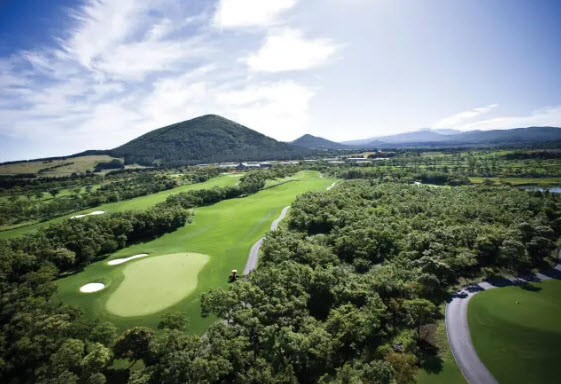
When golfers first encounter Elysian Jeju CC, many come away with a similar impression. The views feel open, and the fairways spread out in a stable, generous way, so at least from the teeing ground, it does not seem especially intimidating. In fact, the psychological pressure at the tee is not particularly strong. That is why first-time visitors often expect that the round will be easier than they thought. But the true character of this golf course begins to reveal itself after the tee shot.
Elysian Jeju CC is not simply a comfortable resort-style golf course. In fact, it is closer to a strategic layout that accepts the opening shot relatively kindly, then tests the player’s judgment on the second shot and on the greens. The moment you relax because your driver has worked well, the angle of the approach shot, the pin position, the elevation changes on the green, and the putting line begin to raise the level of difficulty one after another. That is why this course tends to reward golfers who calculate quickly more than pure power hitters, and management-style players more than instinctive ones.
Each course also has a distinct personality. On the Ocean Course, even a good shot can lead to an ordinary result if you fail to read the wind. The Campo Course creates quiet traps through doglegs and bunkers beneath an atmosphere that looks easy at first glance. On the Lake Course, the real issue is not the water hazard itself, but how you create the right angle for your second shot around it. And on the Pine Course, a single tee-shot position can completely change the next shot because of its refined structure. In other words, although these courses sit within the same golf club, each one requires a completely different way of thinking.
This article is a practical guide for golfers visiting Elysian Jeju CC for the first time, for those who have played it once and want to lower their score this time, and for anyone who needs realistic hole-by-hole strategy during a Jeju golf trip. Rather than simply introducing the course, this guide separates the flow of Ocean, Campo, Lake, and Pine, and explains the principles for early, middle, and late-round management in each.
To state the conclusion first, Elysian Jeju CC is a course that should never be underestimated just because it looks wide. The key to protecting your score here is not raw distance, but knowing where to give up ambition, where to aim for the center, and where to leave yourself an uphill putt.
Why You Need to Understand Elysian Jeju CC Hole by Hole
Elysian Jeju CC is an easy golf course to misunderstand because of its overall image. With its wide fairways, comfortable resort atmosphere, and stable sightlines, its first impression does not seem especially difficult. In reality, however, it has a very clear structure: it lets you begin comfortably from the tee, then encourages mistakes on the second shot and on the greens. That is why there can be a surprisingly large gap in score between the player who understands the hole-by-hole flow beforehand and the one who simply trusts the course because it looks wide.
This course does not pressure players in an aggressive way. It does not use glaring hazards to intimidate from the beginning, nor does it squeeze the fairway dramatically. Instead, it encourages you to swing confidently, then makes the next shot difficult to choose. Once your driver works well and your confidence rises, the course subtly invites you to attack the pin directly, and that is exactly when mistakes most easily turn into dropped shots. That is why a good tee shot does not always lead to a good result.
In the end, Elysian Jeju CC is a course that must be read not as a series of isolated holes, but as a flow linking tee shot, second shot, and putt. You need to know in advance on which holes aggression is justified, when you need to shift into par-save mode, and on which greens you absolutely must not leave yourself a downhill putt. If you understand those things beforehand, the entire round becomes much easier to organize.
In other words, hole-by-hole strategy is not just pre-round study. It is practical preparation for protecting your score. The wider a course looks, the easier it is to become careless, and on a course that invites carelessness, the player who understands the structure first always has the advantage.
Reading the Overall Course Structure of Elysian Jeju CC
Elysian Jeju CC is divided into four courses: Ocean, Campo, Lake, and Pine, and each has a clearly different texture. To play well here, it is not enough to remember simply that “Elysian is a wide course.” On Ocean, wind is the key variable; on Campo, visual misjudgment is the issue; on Lake, hazards shape decisions; on Pine, position is everything.
The Ocean Course feels open and spacious, but many holes are directly affected by the wind. The wide views make it psychologically comfortable, yet distance control and trajectory selection can easily become unstable. The Campo Course may look like the easiest of the four, but in reality it hides a structure where doglegs and bunkers quietly punish careless power. The Lake Course, true to its name, creates strong visual pressure through water, but the real contest is not whether you can carry the water, but whether you can create a good angle around it. The Pine Course combines trees, elevation changes, bunkers, and difficult greens, making it the section that demands the most refined course management.
If you try to play all four with the same swing and the same mindset, there will inevitably be holes where you fall apart. Ignore the wind on Ocean and your distance control will suffer. Assume Campo is easy and swing freely, and you will run into its landing-area design. Let pin-seeking ambition take over on Lake and the hazard will punish you immediately. Be careless with tee-shot position on Pine and the angle for your second shot will suddenly disappear.
The simplest way to remember it is this: Ocean is about wind, Campo about deception, Lake about hazards, and Pine about position. Once these four keywords are in your mind, Elysian Jeju CC begins to make much more sense.
Core Principles for Playing Elysian Jeju CC
The first principle for playing Elysian Jeju CC is clear. This is not a course for hitting it far. It is a course for placing the ball well. Many golfers see the wide fairways and immediately think about distance, but the players who protect their scores are the ones who first think about leaving themselves an easier next shot. It is far more important for the tee shot to finish in a place that opens the angle for the second shot than to travel twenty extra meters.
The second principle is to look at the center of the green before you ever think about the pin. On this course, the more aggressive you are with the second shot, the greater the risk often becomes. If you pull it off, you may create a birdie chance, but you also increase the possibility of the worst outcomes: bunkers, severe slopes, or long downhill putts. Aim for the center of the green instead, and both your par-save percentage and your bogey-avoidance percentage improve. For a first-time visitor especially, center-green strategy is close to the correct answer.
The third principle is to avoid leaving downhill putts. At Elysian Jeju CC, the difficulty of the greens is often determined less by speed than by position. Even on the same green, the putting challenge changes completely depending on where the ball finishes. Even if you give up a little birdie potential, leaving an uphill putt makes your overall score far more stable.
The final principle is that short holes should be played more cold-bloodedly, not more aggressively. Short-looking holes tempt golfers into attacking, but in many cases, they hide bunkers, undulation, or hazards around the green. At Elysian Jeju CC, short holes are often not easy holes at all, but holes specifically designed to lure you into mistakes.
Ocean Course Strategy
If You Cannot Read the Wind, the Open View Will Not Help You
The Ocean Course is the most open-feeling course at Elysian Jeju CC. When you stand on the tee, the view opens fully in front of you, and psychologically it may feel like the easiest of the four. But the true variable on this course is the wind. It may look easy because of the openness, but in reality it is a course where the wind can disrupt every calculation.
Early Holes on the Ocean Course
On the opening holes, adaptation matters more than aggression. The atmosphere makes it feel natural to swing the driver confidently from the start, but what matters here is not distance. It is learning how the day’s wind is actually affecting the golf ball. If you rely only on your normal yardages, your club selection can quickly go wrong.
Hit the tee shot with your usual confident tempo, but decide clearly on the second shot whether the wind calls for one more club or one less. On these early approach shots, it is safer to look at the center of the green or the wider side rather than the pin. The opening stretch of Ocean is not a birdie-making section. It is where you set your wind-adjusted distance feel for the rest of the round.
Middle Holes on the Ocean Course
From the middle portion onward, the wind becomes the dominant factor. Headwinds, crosswinds, or subtle variations from hole to hole make indecision very easy. The most dangerous thing in this stretch is uncertainty. If you enter the swing without having decided whether to take one more club or one less, the result is far more likely to fluctuate.
On the tee shot, managing a wind-resistant trajectory and the landing area matters more than trying to launch a high, long drive. On the second shot, choose your club only after deciding where the safest miss is. The middle stretch of Ocean is driven more by judgment than by pure technique.
Closing Holes on the Ocean Course
The finishing holes combine long par 4s, par 5s, and hazard zones, which increases end-of-round pressure. At this point, the temptation to recover shots is strong, but Ocean’s closing stretch is structured to punish that kind of mentality. On par 5s, a three-shot strategy is far more realistic than an aggressive attempt to reach in two. When wind, slope, and hazards are all factored in, a precise three-shot plan has a higher expected value.
On long par 4s, the smarter approach is to secure the center and take the safest route to the green. Focus on saving par rather than chasing birdie. In the end, the closing holes on Ocean are a battle between wind and ambition, and the player who reduces ambition usually protects the score.
Campo Course Strategy
It Looks the Most Comfortable, but It Is Also the Easiest Place to Be Tricked
Campo gives the softest and most comfortable first impression of the four courses. The sightlines feel stable, the fairways appear generous, and even beginner-to-intermediate players can play with confidence. But that comfort is exactly the trap. Campo is not simply easy. It is a course that looks easy while quietly encouraging mistakes.
Early Holes on the Campo Course
The opening stretch is the kind of area where you want to take driver confidently. In fact, the pressure from the tee is not especially high. But even here, the real key is not distance. It is matching the intended landing area. A drive that feels too good can actually leave an awkward angle.
On the second shot, the priority should be the center of the green and a line that leaves the first putt uphill. If you begin chasing birdies too early, your playing tempo tends to speed up, and that pattern can lead directly to mistakes later in the dogleg-heavy middle stretch.
Middle Holes on the Campo Course
This is where doglegs and bunkers begin to show their real influence. Many golfers see the wide direction ahead and assume they can just swing freely, but on a surprising number of holes, a fairway wood or hybrid is actually the better play. If you read the landing-area bunkers and corner structure correctly, laying back is often the smarter choice.
In this section, understanding the design matters more than choosing driver automatically. The tee shot is about claiming a favorable position, and the second shot is about preserving visibility. In Campo’s middle stretch, restraint often has more value than distance.
Closing Holes on the Campo Course
The closing holes mix in short par 4s and short par 3s, which naturally encourage aggression. But short does not mean easy. In fact, these holes often have tricky green-side structures, and a direct attack at the flag can quickly turn into bogey or worse.
The shorter the hole, the more conservatively it should often be played. Choosing a club that leaves a comfortable wedge yardage or a distance you can handle more easily is often better than automatically taking driver. Campo’s closing stretch rewards the golfer who can hold back, not the one who tries to force the issue.
Lake Course Strategy
This Is Not a Course Where You Simply Avoid Water — It Is a Course Where Water Must Be Included in the Calculation
The Lake Course creates strong psychological pressure through its water hazards. The moment water enters a golfer’s field of view, it becomes easy to think more than usual about direction, and once that happens, swing rhythm can quickly suffer. But the real contest here is not the water itself. It is how well you create angles around it.
Early Holes on the Lake Course
The opening stretch is where hazards begin to enter your sightline and directional pressure starts to build. The most important thing here is not distance, but preserving direction. The stronger your urge to carry the water cleanly, the more your swing tends to grow and the bigger the miss becomes.
On the tee shot, prioritize the center of the fairway or the widest safe area. On the second shot, aim for the center of the green or the wider side. The early part of Lake is not where you fight the hazard. It is where you calculate the safe area while accepting the hazard as part of the hole.
Middle Holes on the Lake Course
From the middle stretch onward, the second-shot difficulty rises clearly. Even when the tee shot looks acceptable, the exact line the ball is on can completely change the green approach. This is where you need to give up direct pin attacks and begin by eliminating the worst possible outcome.
Club selection also needs to be conservative. It is usually better to be slightly long and still have an approach than to come up short and find the water. In Lake’s middle stretch, the quality of the decision matters more than the quality of the swing. A choice that removes bad outcomes protects the score better than a heroic shot.
Closing Holes on the Lake Course
The closing holes are among the stretches at Elysian Jeju CC where the score difference can become largest. Long par 4s and par 5s invite the urge to recover lost shots, and Lake is exactly the course that punishes that urge the most severely.
On the par 5s, a lay-up strategy is almost always the correct answer. Trying to reach in two means taking on hazard, wind, and angle risk all at once, which lowers the percentage sharply. On the par 4s as well, the right play is to secure the center and choose the widest, safest side. The closing stretch of Lake demands composure more than courage.
Pine Course Strategy
Here, a Well-Placed Shot Matters Far More Than a Purely Well-Struck One
Pine can be seen as the most refined course at Elysian Jeju CC. Trees, bunkers, elevation changes, and green difficulty all work together, and many holes are constructed so that a single tee-shot position changes the entire second shot. It may not look extremely narrow at first glance, but in reality, where you place the ball is almost everything.
Early Holes on the Pine Course
You feel the importance of tee-shot position right from the start. The goal is not simply “middle of the fairway,” but “the side that opens the next shot.” Even within the same fairway, one side may offer a clear look at the flag while the other leaves the pin hidden behind trees.
On the second shot, the priority is not direct pin attack, but securing a safe route. If you force things too early, the entire Pine Course can begin to feel much harder than it really is. This section requires map-reading ability more than raw power.
Middle Holes on the Pine Course
This is a stretch with many holes where deliberately laying back is the right play. That is why even a well-hit driver does not always feel satisfying. If it travels far but leaves the view blocked by trees or brings both bunkers and trees into play, the result can be worse than if you had intentionally laid back.
Using a fairway wood or hybrid to leave yourself a confident yardage and a better position can be much more efficient. The same principle applies on the second shot. Avoid hero shots. Rather than trying to thread it between trees or fire directly at the pin, play to a safe area and let the next shot do the work. That is far more score-friendly.
Closing Holes on the Pine Course
The finishing stretch is where the difficulty of the greens becomes most obvious. By this point, energy is lower and the mind is easier to shake, so putting mistakes increase. In this section, the goal should be two-putting, not making birdies.
From the second-shot stage, you should already be choosing the side that leaves an uphill putt. Being close to the hole matters less than avoiding a dangerous downhill putt. On the first putt, the mindset should not be “make it,” but “leave it inside conceding range.” Pine’s finish is decided by patience and finishing concentration.

The Right Answer for Driver, Second Shot, and Green Management
The overall management principles that run through Elysian Jeju CC are very clear. With the driver, you should choose based on landing area rather than full power. On the second shot, the center of the green is usually the right answer over the pin. And on the greens, avoiding downhill putts is the single most important goal.
There is no reason to swing as hard as possible just because the course looks wide. On Ocean, wind is the issue; on Campo, doglegs and bunkers; on Lake, hazards; on Pine, positional design. A good tee shot is not the one that goes the farthest, but the one that leaves the easiest second shot.
The second shot is the true battleground at Elysian Jeju CC. A direct attack at the flag may create a birdie chance, but it also expands the risk of the worst possible result. By contrast, aiming at the center of the green raises both your par-save rate and your bogey-avoidance rate. For first-time visitors or on windy days, center-green strategy is very close to the right answer.
On the greens, the key is leaving uphill putts. At Elysian Jeju CC, once three-putts begin to pile up, the flow of the round can collapse very quickly, so the priority should be finishing in two rather than forcing putts into the hole. On this course, second-shot angle matters more than the tee shot, and putt-line management matters more than the second shot itself.
Conclusion
At first glance, Elysian Jeju CC looks like a wide, comfortable resort-style golf course. In reality, however, it is a strategic layout where wind, visual deception, hazards, and positional design all combine to test a player’s judgment continuously. On Ocean, you must read the wind. On Campo, you must not be fooled by the easy-looking appearance. On Lake, you must think about angle before you think about hazard. And on Pine, positional play is practically everything.
This is not a course where the longest hitter automatically has the advantage. The player who calculates where to place the ball, when to lay back, how much ambition to allow, and what kind of putt to leave will ultimately produce the better result. For beginners, the lack of tee-shot pressure can make the course feel comfortable. For intermediate and advanced players, however, it functions as a sharp test of score management on the second shot and on the greens.
The core of the hole-by-hole strategy is simple and clear: do not get careless just because it looks wide, do not attack just because it looks short, aim at the center instead of the pin, and leave yourself uphill putts rather than downhill ones. If you follow just those four principles all the way through, Elysian Jeju CC becomes much easier, and your satisfaction with the round rises dramatically.
Put into a single sentence:
Elysian Jeju CC is a resort-style strategic course where refined design hides beneath a comfortable atmosphere, and the more thoughtfully you play it, the better it rewards you.