Complete Strategy Guide to La Vie Est Belle CC in Chuncheon
A Pro-Level Approach to Understanding and Playing the Old and Dunes Courses
When talking about golf courses in Chuncheon, La Vie Est Belle CC is not a place that can be explained simply as a “popular public course.” Once you actually step onto the course, it becomes immediately clear why so many golfers classify it as a prestige-level public course. It goes beyond having good facilities, beautiful scenery, and excellent turf conditions. The course itself is designed to test a player’s judgment and skill all the way to the end.
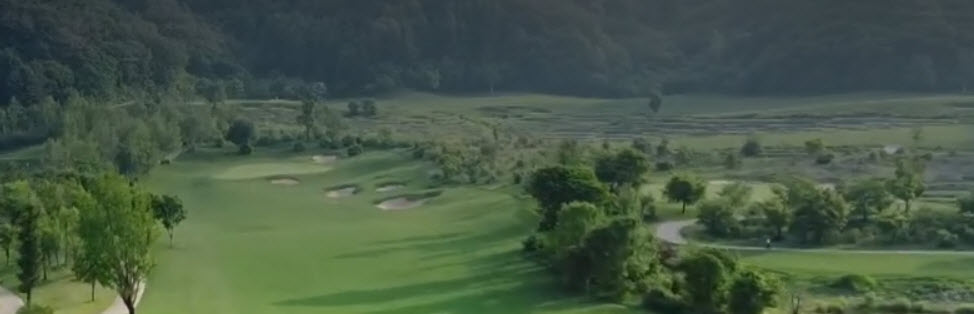
At first glance, the course feels surprisingly comfortable. The fairways are wide, the sightlines are open, and the layout appears spacious rather than constricted. Because of this, first-time visitors often assume, “This might be easier than expected.” But that is precisely the first trap of this golf course.
La Vie Est Belle is a course that reassures you at the teeing ground, then reveals its true nature once the ball lands.
Even when you hit a solid tee shot, you often arrive at the ball to find an awkward lie or angle. On approach shots, it becomes more important to calculate the safe landing zone than to attack the pin. On fast, undulating greens, protecting a two-putt is often far more realistic than chasing birdies.
One of the defining characteristics of La Vie Est Belle CC is that the Old Course and the Dunes Course, although located within the same property, challenge golfers in completely different ways. The Old Course demands precise iron play, accurate distance control, and thoughtful second-shot execution, as expected from a traditional mountain-style championship course. The Dunes Course, on the other hand, tests judgment and mental stability through wide-open visuals, wind, blind shots, and optical illusions.
If you fail to understand this distinction, you will struggle with your irons on the Old Course and lose direction and rhythm on the Dunes Course. But if you approach each course with a clear understanding of its character, you will quickly realize why La Vie Est Belle is not just a popular public course, but a place where you can experience true golf in its purest form.
In this guide, we will break down the overall structure of La Vie Est Belle CC, explain what each course demands from a player, and outline how to approach every shot—from the tee to the green—from a professional perspective. This is not just a course introduction, but a strategy-focused guide to help you actually score better.

Overall Structure and Core Strategy of La Vie Est Belle CC
To properly play La Vie Est Belle, you must first understand its true nature. Many golfers remember it simply as a large 36-hole public golf course. But in actual play, what matters more than the number of holes is the character of the courses.
This is not just a large facility—it is a golf club designed to expose a player’s weaknesses through two completely different styles of courses. The Old Course represents the fundamentals of a traditional mountain-style championship layout, while the Dunes Course introduces a completely different way of thinking through links-style elements and wind.
Despite their differences, both courses share one fundamental principle:
At La Vie Est Belle, the tee shot is not everything.
A well-struck driver does not automatically make the hole easier. Instead, the difficulty is determined by the position of the ball after the tee shot, the lie, and the angle into the green.
That is why professionals do not see this as a power course. It favors golfers who think in terms of positioning and connection, rather than distance.
From a pro’s perspective, the course can be summarized as follows:
- Tee shot: Position
- Second shot: Precision
- Putting: Distance control
The goal of the tee shot is not distance, but setting up the next shot.
The second shot is not about attacking the pin, but managing miss zones.
Putting is not about making everything, but about finishing within two putts.
La Vie Est Belle is not a course dominated by one great shot—it is a course where connected decisions reduce strokes.
Differences Between the Old Course and the Dunes Course
The greatest appeal of La Vie Est Belle lies in the fact that the Old and Dunes courses require completely different playing philosophies, not just different atmospheres.
Old Course
The Old Course reflects the essence of a traditional Korean championship layout.
- Elevation changes are prominent
- Strategic bunkers influence sightlines
- Approach shots require precise landing zones
Simply hitting the green is not enough—you must decide where to land the ball. Elevated greens and complex green structures demand precise trajectory, direction, and distance control.
The Old Course rewards fundamental golf.
Iron quality matters more than driving distance.
Planning matters more than aggression.
Dunes Course
The Dunes Course is a completely different world.
- Minimal trees
- Wide-open visuals
- Strong wind influence
At first glance, it may look easier. But that openness is deceptive. Once the wind comes into play, distance control, shot shape, and alignment all become unstable. Blind holes and narrow landing zones add further complexity.
On the Dunes Course, playing “what you see” leads to mistakes.
You must calculate wind, rollout, and trajectory to survive.
Key Summary
- Old Course: Challenges you through terrain and second-shot difficulty
- Dunes Course: Challenges you through wind, visuals, and directional control
Both share one truth:
The moment the tee shot feels easy is when the real challenge begins.
Key Strategy for the Dunes Course
The defining feature of the Dunes Course is that it looks wide, but the actual playable lines are narrower than they appear.
Because of the open visuals, golfers feel comfortable. But without knowing the true safe zones and how wind and terrain affect the ball, scores can quickly fall apart.
The key is not aggression, but clarity of direction.
- On opening holes with hazards → aim conservatively toward the safer side
- On narrowing landing zones → prioritize accuracy over power
- On blind holes → rely on clear aiming points, not instinct
- On par 3s → aim for the center of the green, not the pin
Par 5 Strategy
Par 5s may look like scoring opportunities, but:
The player who knows where to stop has the advantage.
Instead of forcing distance, focus on setting up a clean third shot.
Old Course Practical Strategy
The Old Course rewards textbook golf.
Even solid tee shots can lead to difficult second shots due to:
- Awkward lies
- Elevated greens
- Strategic bunker placement
Key Points
- Favor safe-side tee shots that improve approach angles
- Play one extra club into elevated greens
- Target the center of the green rather than the pin
On par 5s, only attack when conditions are perfect. Otherwise, a controlled lay-up and wedge approach is the smarter play.
The Old Course is decided not by your driver,
but by your iron decisions.
Tee Shot and Second Shot Management
At La Vie Est Belle:
The tee shot is only the beginning.
A good tee shot is not the longest—it is the one that makes the next shot easier.
The second shot is the true turning point.
- Avoid direct pin attacks
- Aim for the center or safest zone
- Prioritize par over birdie
This approach reduces mistakes and stabilizes scoring.
Wind and Putting Strategy
On the Dunes Course, wind acts as an additional hazard.
- Adjust not just direction, but trajectory
- Lower ball flight and rollout control become essential
Putting is equally demanding on both courses:
- Fast, multi-tiered greens
- Small distance errors lead to three-putts
A good putter here is not someone who makes many putts,
but someone who avoids three-putts.
Focus on leaving easy second putts rather than forcing birdies.
First-Time Player Tips
- Do not rely too much on your driver
- Adjust strategy between Old and Dunes
- Reduce pin-seeking aggression
- Trust course guidance (especially caddies)
- Focus on minimizing mistakes rather than making birdies
Mental control is crucial. The course constantly invites aggression—but the winning player stays disciplined.
Conclusion
La Vie Est Belle CC in Chuncheon is not just a good public golf course. It is a large-scale, prestige-level strategic course that combines the density of a traditional mountain championship layout with the distinct character of a links-style course.
- Tee shots may look free, but actual lines are restricted
- The challenge begins from the second shot onward
- Fast, multi-tiered greens, large bunkers, hazards, wind, and elevation create a true test of skill
Reservations are competitive, and costs are not low. But the experience is absolutely worth it.
Final One-Line Summary
La Vie Est Belle CC is a course where aggression kills, and calculation survives.
If you want to experience real golf in Chuncheon—and truly test how honest your game is against the course—La Vie Est Belle will meet that expectation.